
The New Leica Noctilux-M 35 f/1.2 ASPH: A Dream Lens Leica Fans Never Thought We’d Get
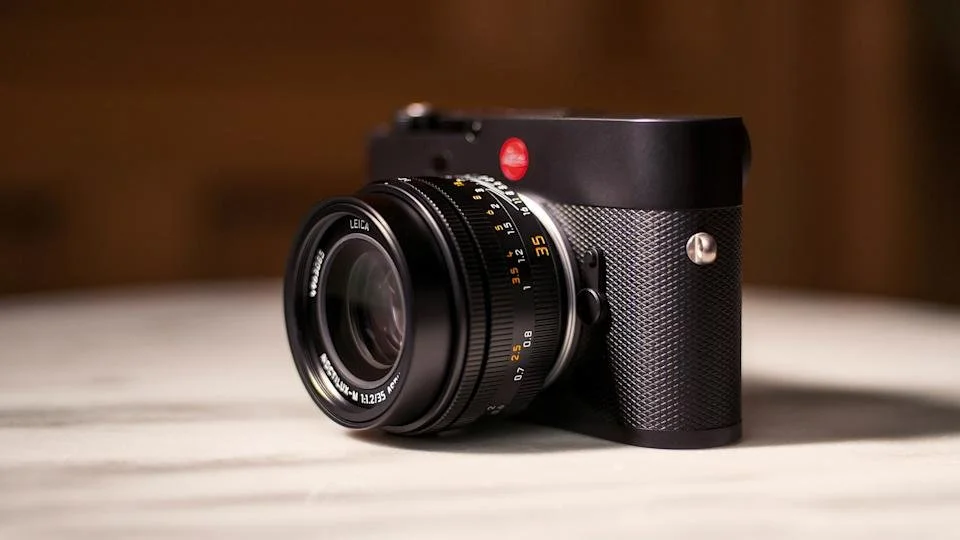
Leica people are used to wanting unreasonable things.
We want tiny cameras made from brass. We want lenses that somehow feel mechanical and emotional at the same time. We want modern performance, but not at the expense of character. And if we are being honest, we also want lenses that make us feel something before we even lift the camera to our eye.
That is exactly why the new Leica Noctilux-M 35 f/1.2 ASPH. feels so special.
Because this is not just another fast M lens. It is not just another luxury object. And it is definitely not a routine update. This is the first-ever 35mm Noctilux, which means Leica has taken one of the most loaded names in its lens history and attached it to the focal length many M shooters actually use every day.
For a Leica enthusiast, that is a big deal.
The 35mm focal length has always been the beating heart of the M system: reportage, travel, street, documentary, environmental portraiture, the “one lens” way of seeing. Until now, if you wanted the ultimate Leica 35, you usually looked to the Summilux world. Noctilux belonged to a different mythology — a little more extreme, a little more indulgent, more often associated with 50mm and the pursuit of depth, glow, and atmosphere. The new Noctilux-M 35 f/1.2 changes that.
And honestly, it feels like Leica finally gave 35mm shooters permission to be extravagant.
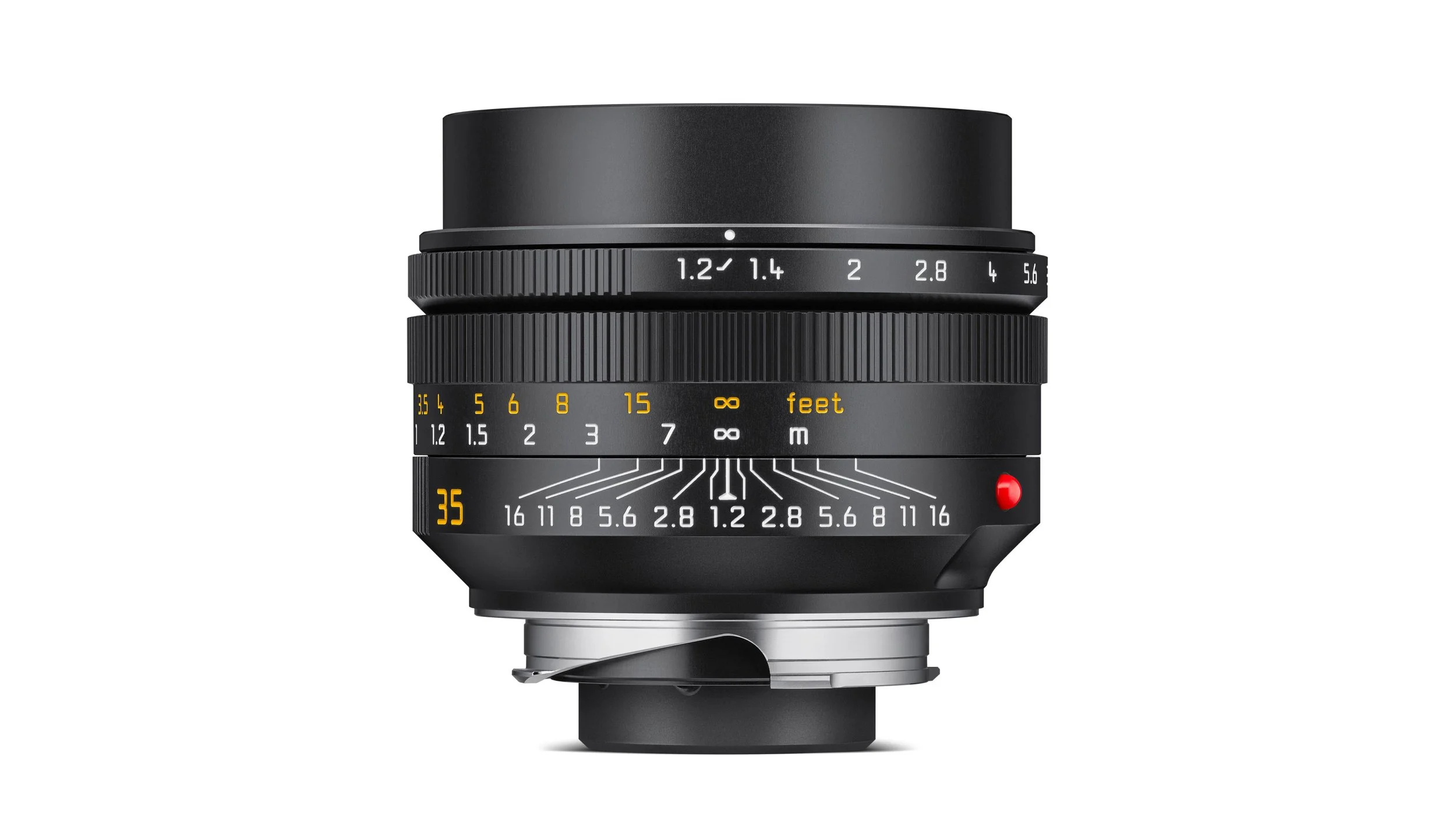
Image credit: Leica
What makes this lens so exciting
On paper, the new Noctilux-M 35 f/1.2 ASPH. is already serious: f/1.2, a 10-element, 5-group optical design, three aspherical lenses, and a floating element. Leica also says it was optimized for high-resolution M cameras, which matters in a world where M bodies are no longer forgiving little film boxes but demanding digital machines that reveal everything.
But the reason people will fall in love with it is not the spec sheet.
It is the promise of a 35mm image that can still feel intimate. A lens wide enough to tell a story, but fast enough to melt a background into mood. Leica describes the rendering as high-contrast with a distinctive look and a velvety, soft bokeh at wide aperture. That sounds exactly like what many of us hoped a 35mm Noctilux would be: not merely sharp, but cinematic.
And then there is the surprise that really makes this lens feel modern rather than nostalgic: close focus down to 50 cm. Leica says this is the first Noctilux to offer that. On a rangefinder M body, the optical finder still works down to 70 cm, but from 70 to 50 cm you focus using Live View or the Visoflex. That may sound like a small spec detail, but in real use it changes the character of the lens. It means the Noctilux look is no longer reserved for a more traditional shooting distance. It can now move closer, tighter, more personal.
So what’s different from the previous versions?
This is where it gets interesting.
Strictly speaking, there is no “previous version” of this exact lens. Leica has never made a Noctilux-M 35 before. So the real differences are from the lenses that came before it in spirit.
1. The biggest difference: this is a Noctilux at 35mm, not 50mm
The Noctilux name is most strongly associated with 50mm, especially the Noctilux-M 50 f/1.2 ASPH. Leica’s current 50/1.2 Classic Line lens is essentially a modern revival of a legendary older design, built to preserve a classic image character with modern manufacturing. Leica describes that 50 as combining classic rendering with updated precision, using six lenses in four assemblies and two aspherical lenses.
The new 35/1.2 is a different kind of idea entirely. It is not a historical reissue. Leica says it has been completely redesigned and optimized for modern high-resolution sensors. In other words, this is not Leica looking backward. This is Leica deciding that the Noctilux philosophy should exist in a more contemporary, more versatile focal length.
2. It is much more modern in concept than Leica’s recent nostalgic Noctilux releases
The 50mm Noctilux-M f/1.2 ASPH. is beautiful precisely because it embraces legacy character. The new 35mm Noctilux feels more forward-looking. Leica emphasizes new production methods, Precision Glass Moulding for the aspherical elements, compatibility with high-resolution sensors, and stable performance across the focus range via a floating element.
That makes the 35/1.2 feel less like a tribute and more like a mission statement.
3. It brings close-focus practicality to the Noctilux name
Again, Leica says this is the first Noctilux with focus extended to 50 cm. That alone separates it from earlier Noctilux thinking. Traditional Noctilux lenses were often about atmosphere and mystique; this one seems equally concerned with usability.
For me, that is one of the most important differences. Leica did not just make a 35mm lens very fast. They made it relevant to how M photographers actually shoot today.
4. It is compact in a way that feels almost suspicious
Leica says the lens is about 50.2 mm long, roughly 64.6 mm in diameter, and weighs about 416 g. For a 35mm f/1.2 M lens, that is remarkably restrained. The press release even makes a point of its compact dimensions.
That matters because the M system has always been about balance. If a lens is too large, it may be optically brilliant but spiritually wrong. This one, at least on paper, seems to respect the camera it is built for.
5. Compared with the old 35mm kings, this is a different personality
The natural comparison inside Leica’s own lineup is the Summilux-M 35 f/1.4 ASPH. That lens is the classic reportage tool: compact, versatile, close-focusing down to 40 cm, with improved bokeh over its predecessor and 11 diaphragm blades. Leica presents it as a fast 35 built for everyday use.
The Noctilux-M 35 f/1.2 ASPH. is not replacing that lens. It is stepping into a different emotional register.
The Summilux says: “I can do almost everything.”
The Noctilux says: “Yes, but what if everything felt more dramatic?”
That extra third of a stop from f/1.4 to f/1.2 is not just about light. It is about intent. It is about choosing a lens because you want your 35mm images to feel more immersive, more sculpted, more atmospheric.
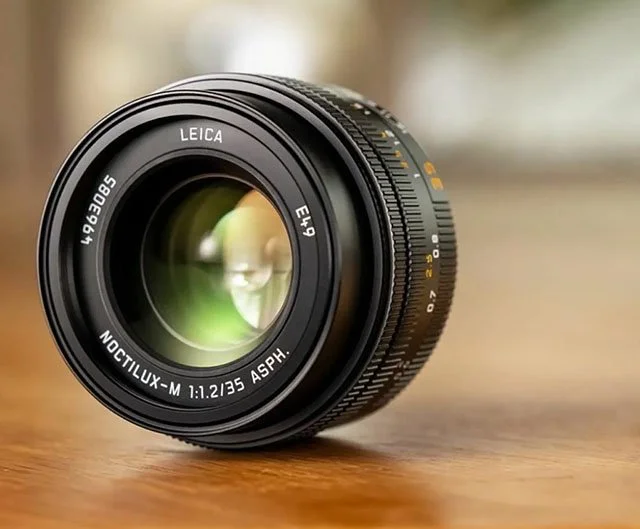
Image credit: Leica
What I think Leica is really doing here
I do not think Leica made this lens just because it could.
I think Leica looked at how people actually shoot with M cameras in 2026 and recognized something important: many of us no longer want to choose between 35mm storytelling and Noctilux emotion. We want both.
We want the width of 35mm, but not the emotional distance that can sometimes come with wider lenses. We want to keep context in the frame while still isolating a subject. We want a lens that can shoot a street scene, a portrait, a dim café, a rainy pavement, a musician backstage, and a friend by window light — and still make it all feel unmistakably Leica.
That is what this lens seems designed to do.
And there is another clue in Leica’s own messaging: the company explicitly links the lens to the new Leica M EV1, noting that the EVF makes focusing across the full range, especially the close-focus zone, more convenient. That suggests the 35/1.2 is not just a lens release. It is part of Leica’s broader attempt to stretch the M concept without abandoning it.
Will it become a classic?
That depends on what you think a Leica classic is.
If a classic is a lens that defines a generation of work, then the Noctilux-M 35 f/1.2 ASPH. has a real chance. Not because it is rare or expensive or technically ambitious, but because it sits right at the crossroads of Leica desire: 35mm, f/1.2, compact, modern, handmade in Wetzlar, and unapologetically emotional.
For years, the fantasy lens in the Leica world was some version of this exact idea. A true Noctilux in the focal length M shooters live with. Not a laboratory exercise. Not a collector’s curiosity. A real working lens with an extravagant soul.
And now it exists.
For Leica enthusiasts, that is enough to make this one of the most exciting M-lens releases in years.