
Leica Goes Metal Grey
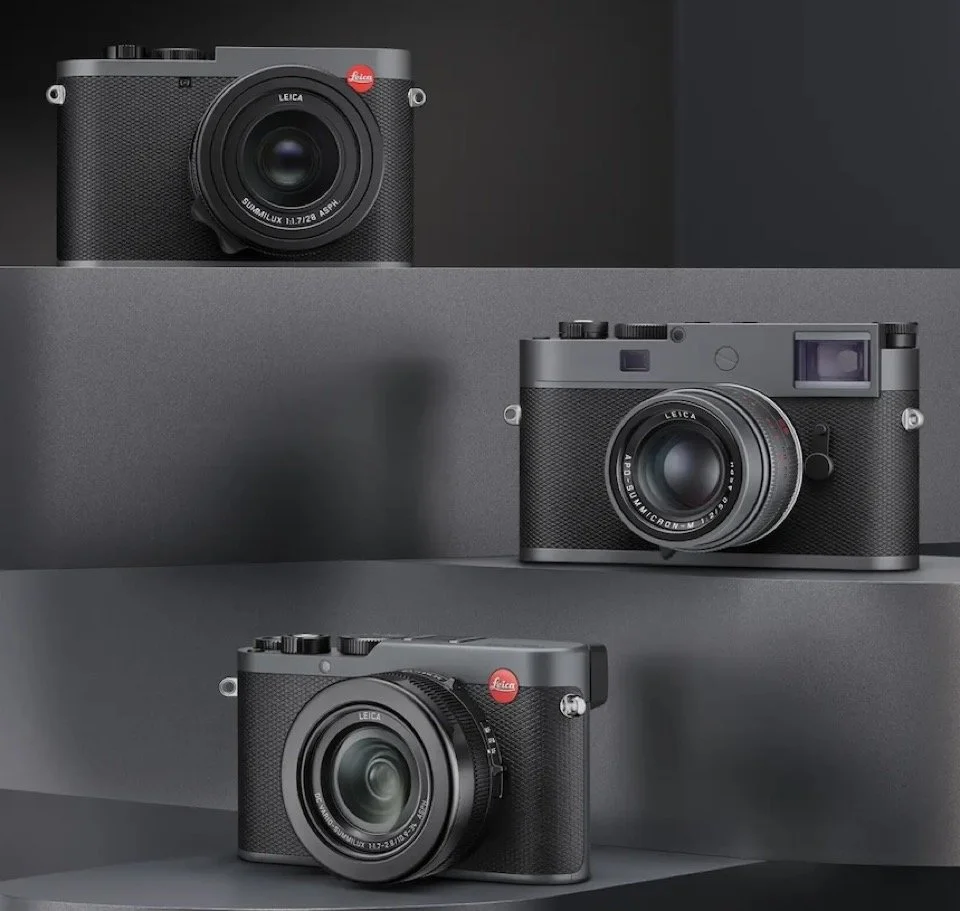
A Quietly Gorgeous New Chapter for the M11-P, Q3, D-Lux 8 and APO-Summicron-M 50
There are Leica releases that arrive with spectacle, and then there are Leica releases that simply lower their voice and make the room pay attention.
The new Metal Grey family belongs to the second category.
On paper, Leica’s latest announcement sounds almost modest: a new colour option across selected cameras and one of the most revered M lenses in the catalogue. But anyone who has spent time with a Leica knows that finish is never “just finish.” With Leica, the feel of the top plate, the tone of the engraving, the way a camera wears in rather than wears out, all of it becomes part of the experience. A Leica is not only a picture-making instrument. It is an object you build a relationship with.
That is what makes this new Metal Grey release so interesting. It is not a special-edition gimmick sprayed over a familiar body. It feels more like Leica quietly expanding its visual language. For decades, the Leica palette has mostly lived between black paint, black chrome, silver chrome and the occasional collector’s flourish. Metal Grey sits somewhere else. It is softer than black, less nostalgic than silver, and more modern than both. It has the cool confidence of a well-used titanium watch, the restraint of a German sports car in a shade you only notice when the light shifts.
And Leica, being Leica, has not gone halfway. The new Metal Grey line includes the Leica M11-P, Leica Q3, Leica D-Lux 8 and a matching APO-Summicron-M 50mm f/2 ASPH. lens. There are also coordinated accessories: dark-brown leather protectors, straps, a Metal Grey BP-SCL7 battery for the M11 line, a black multifunctional M11 protector with grip and Arca-Swiss-compatible base, plus cognac and braided leather options for the D-Lux 8.
This is Leica doing what it does best: turning restraint into desire.
Why Metal Grey Matters
To understand why this release has Leica people talking, you have to understand the emotional weight of colour in the Leica world.
Leica owners are famously particular. A black paint M feels different from a silver chrome M. A Safari edition says something different from a Reporter edition. Even the absence of a red dot can change the entire character of a camera. The little decisions matter because Leica cameras are unusually tactile machines. You don’t just operate them; you carry them, look at them, hold them, and in the case of an M, sometimes slow yourself down just to meet the camera on its own terms.
Metal Grey lands at a fascinating moment. The camera market is louder than ever: stacked sensors, computational autofocus, AI-powered subject recognition, specs designed to dominate thumbnails. Leica is playing a different game. Instead of shouting, this finish whispers. It says: here is the same essential tool, but with a different mood.
The colour itself gives Leica’s design a more contemporary edge. Black can be stealthy, silver can be classic, but Metal Grey feels architectural. It emphasizes the lines of the M11-P and Q3 without making them flashy. It also pairs beautifully with black controls, red lens markings and dark-brown leather, creating a look that feels both industrial and warm.
This is not Leica chasing trends. This is Leica reminding everyone that industrial design can be emotional.
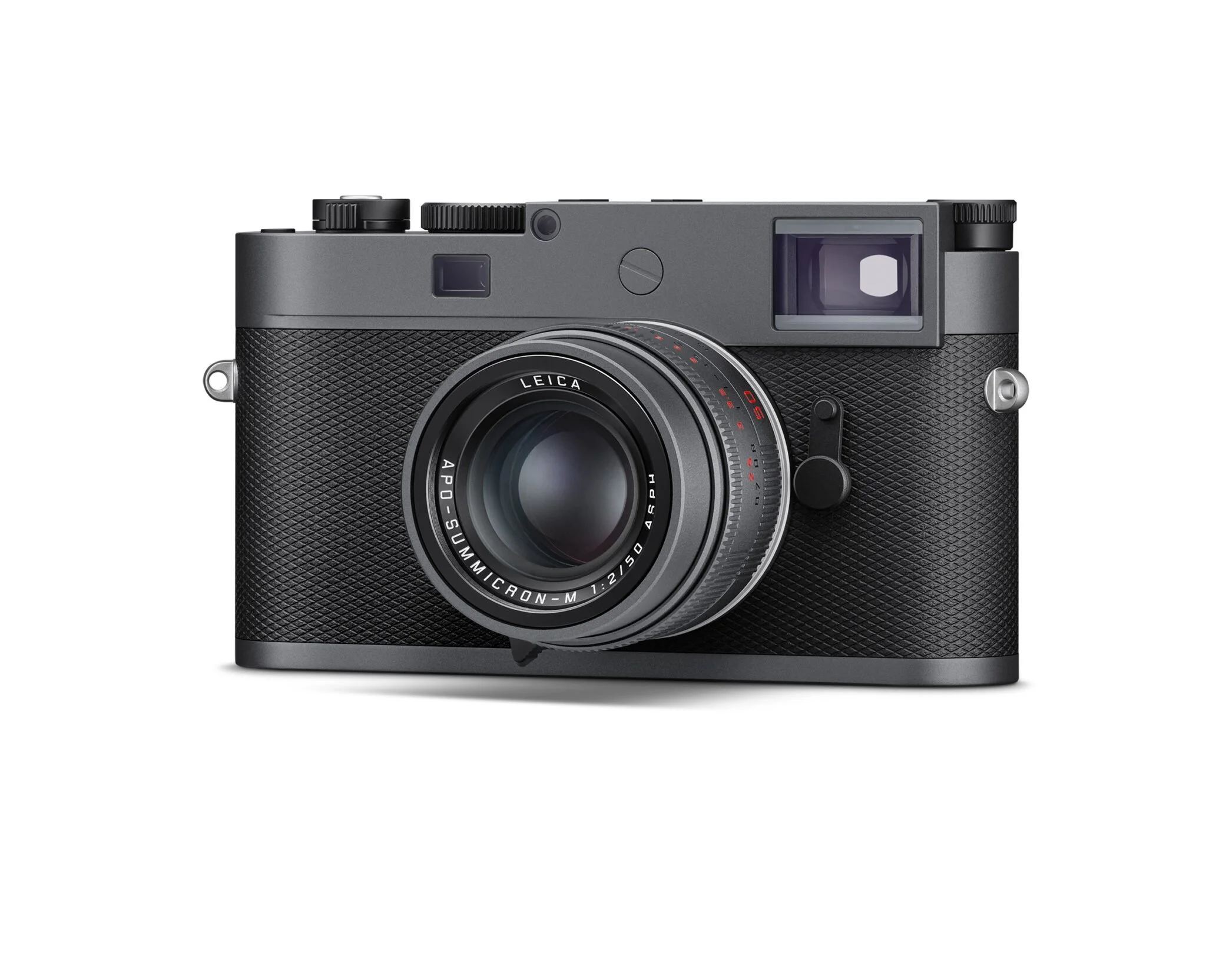
Leica M11-P Metal Grey: The Rangefinder Gets a Modern Suit
The headline piece, at least for M devotees, is the Leica M11-P in Metal Grey. The M11-P already occupies a special place in the current lineup. It is the quieter, more refined sibling of the M11, stripped of the front red dot and given Leica’s “P” treatment: understated design, professional intent, and a sense that this is the M for photographers who would rather disappear into the street than announce themselves.
In Metal Grey, the M11-P takes on a new personality. The full-metal body gets the new finish, while black control elements create contrast. The diamond-patterned leatherette remains, adding texture against the cool body tone. The result is not vintage cosplay and not futuristic minimalism. It sits somewhere in between.
That balance is important. The M11-P is a digital rangefinder with old-world manners and modern guts. It carries the 60-megapixel full-frame BSI CMOS sensor of the M11 generation, Leica’s Triple Resolution Technology, internal storage, USB-C charging and connectivity, while preserving the direct, manual, frameline-driven shooting experience that defines the M system.
The Metal Grey finish enhances that duality. It makes the M11-P look less like an inherited heirloom and more like a contemporary precision tool. Still unmistakably Leica, but with the edges sharpened.
For collectors, this will be desirable. For working photographers, it may be even more interesting because it is not loud. It has presence, but not vanity. It is the kind of camera that looks expensive only to people who already know.
And that is the best kind of Leica flex.
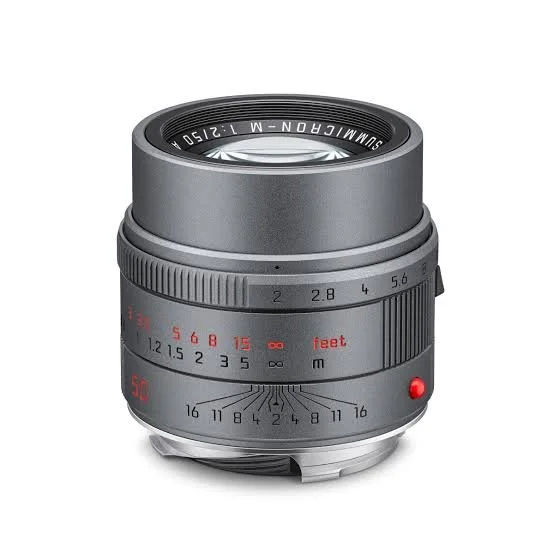
APO-Summicron-M 50mm f/2 ASPH. Metal Grey: The Perfect Match
If the M11-P is the body that sells the story, the APO-Summicron-M 50mm f/2 ASPH. in Metal Grey is the sentence Leica lovers underline.
This lens has long been treated as one of the great modern M lenses. It is compact, clinically brilliant when needed, yet still capable of that natural Leica rendering that makes a photograph feel less like a file and more like a witnessed moment. The APO correction, the resolution, the mechanical precision — it is the kind of lens that makes 50mm feel less ordinary than inevitable.
In Metal Grey, it becomes the ideal partner for the M11-P. Leica has finished the lens elements and front cap in the new tone, with red engravings for the feet and aperture scales. That detail matters. The red markings against the grey barrel give the lens a small flash of drama without breaking the overall restraint.
This pairing may become one of the most elegant current-production Leica combinations: M11-P Metal Grey, APO 50 Metal Grey, dark-brown strap, no red dot, black controls. It has the feel of a camera that was designed for long walks, quiet assignments, and serious photographs.
Of course, the price places it firmly in dream-kit territory. But Leica has never pretended the APO-Summicron-M 50 was an impulse purchase. It is a benchmark lens, and this finish gives it a body worthy of the reputation.
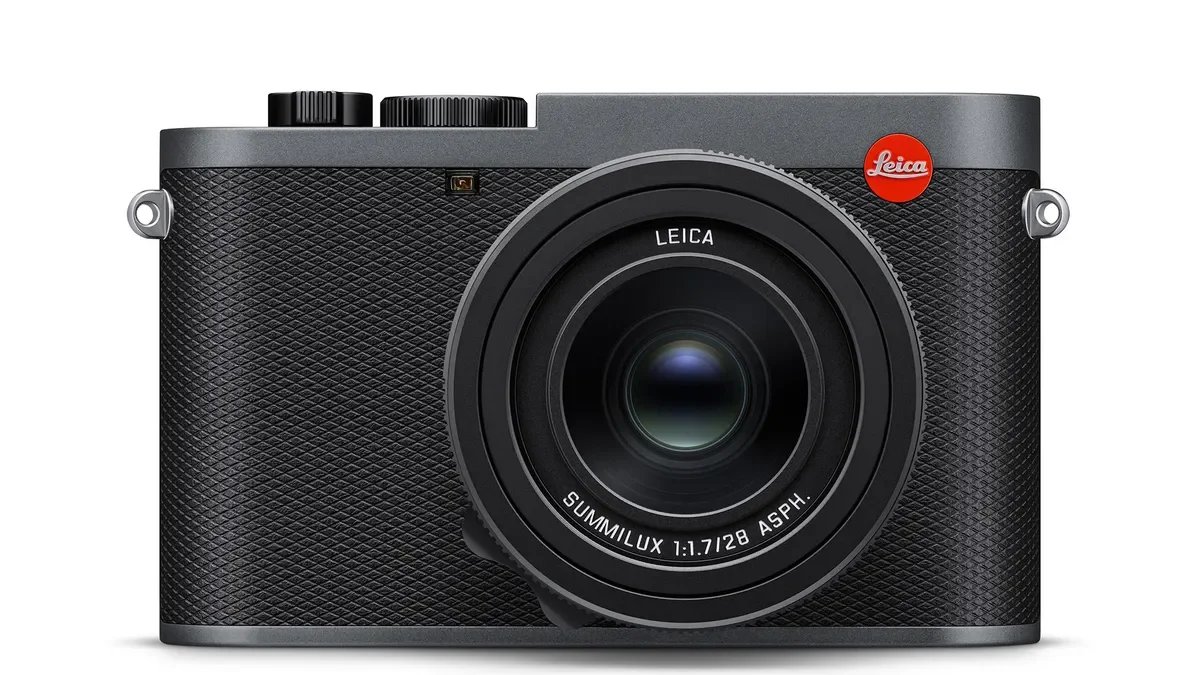
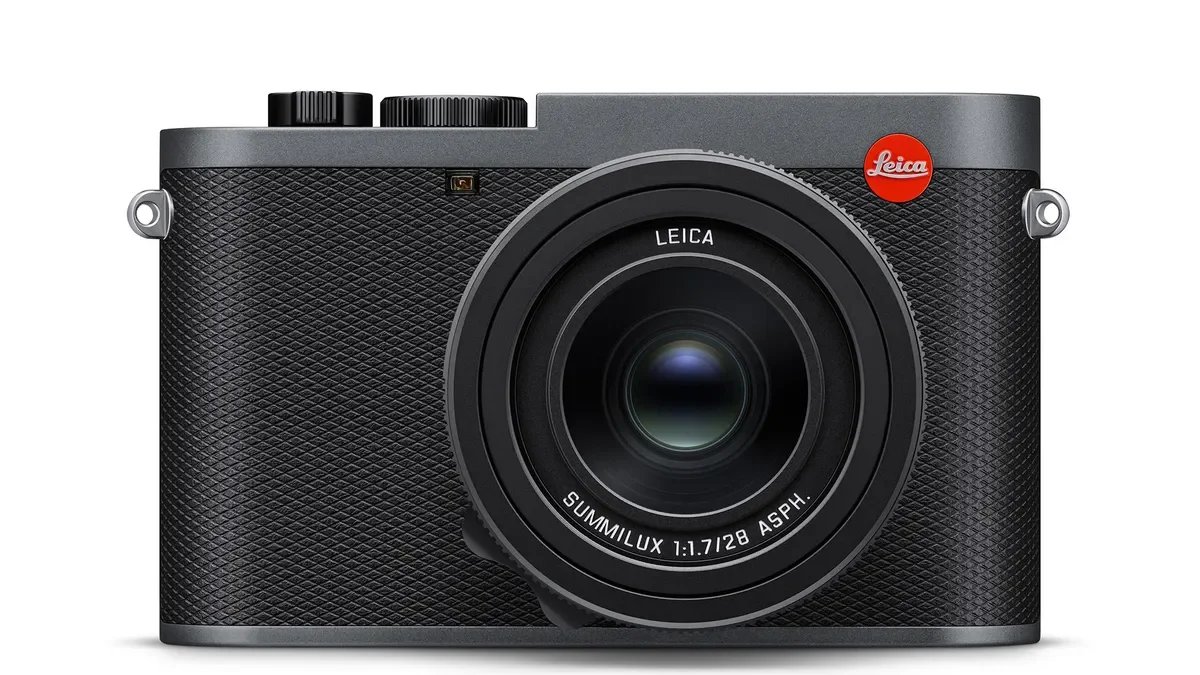
Leica Q3 Metal Grey: The Everyday Icon Gets Cooler
The Q3 might be Leica’s most important modern camera because it carries the brand into everyday life better than almost anything else. It is full-frame, fixed-lens, autofocus, compact enough to travel, powerful enough for professional work, and simple enough to become second nature.
In standard black, the Q3 is already a modern classic. In Metal Grey, it gets a little more romance.
The Q3 Metal Grey keeps the same core technology as the standard Q3: a 60-megapixel full-frame sensor, the superb Summilux 28mm f/1.7 ASPH. lens, hybrid autofocus, tilting screen, strong video features and Leica FOTOS connectivity. The difference is visual and tactile. The body receives the new metallic grey finish, black controls provide contrast, and the lens markings for distance and aperture are rendered in red.
That last touch will be catnip for Leica fans. Red engravings on a Leica lens are not just decoration; they feel like a nod to the mechanical language of older cameras and lenses. On the Q3, they add just enough spice to keep the camera from looking too clinical.
The Q3 is the camera I imagine benefiting most from this finish in daily use. It is the Leica you sling over your shoulder for a city walk, a restaurant, a train ride, a week in Paris, or a morning when the light looks too good to waste. Metal Grey gives it an even more refined presence. It looks less like a piece of consumer electronics and more like a small optical instrument.
That is exactly what the Q3 is.
Leica D-Lux 8 Metal Grey: The Gateway Leica Grows Up
The D-Lux 8 is sometimes described as an entry point into Leica, but that undersells its charm. It is small, handsome, practical and genuinely useful. It is the Leica for people who want the feel of a real camera without committing to the cost, weight or ritual of an M or Q.
In Metal Grey, the D-Lux 8 gets a surprising lift.
The body and function buttons are finished in metallic grey, while the remaining controls and dials stand out against black. The camera keeps its fast DC Vario-Summilux 10.9–34mm f/1.7–2.8 ASPH. zoom lens, giving users a versatile equivalent range for travel, street, family and everyday documentary work. It is pocketable in a way the M and Q are not, and that matters.
What makes the D-Lux 8 Metal Grey interesting is that Leica has treated it as part of the same design story, not as a lesser product. It gets the same colour-language attention as the M11-P and Q3. The accessories help, too: a cognac leather case, braided black leather wrist strap and matching carrying strap. Together, they make the D-Lux feel less like the “small Leica” and more like the “always-with-you Leica.”
For many photographers, that may be the most important Leica of all.
A camera that is actually with you beats the dream camera left at home.
The Accessories Tell the Real Story
One of the smartest parts of this release is the accessory ecosystem. Leica did not simply recolour a few cameras and stop there. It built out the look.
For the M11-P, the Metal Grey battery is a small but wonderful detail. Most companies would never bother matching a removable battery to a camera finish. Leica did. That is exactly the kind of obsessive design decision Leica buyers notice.
The dark-brown leather protector and carrying strap add warmth to the cool body tone. The multifunctional black leather protector for the M11 is also practical, combining protection with a handgrip and an Arca-Swiss-compatible base. That means the camera can go straight onto compatible tripods without a separate plate — a small ergonomic touch that working photographers will appreciate.
For the Q3, the dark-brown leather protector and strap give the camera a travel-journal elegance. For the D-Lux 8, the cognac case and braided straps push the compact into lifestyle territory without making it feel unserious.
This is the Leica ecosystem at full strength. The cameras are the main event, but the accessories complete the character.
Is Metal Grey a Collector Move or a Photographer’s Move?
The honest answer is both.
Collectors will want the M11-P and APO-Summicron-M 50 pairing because it is visually coherent, relatively special, and likely to age beautifully. Leica colour variants tend to attract attention because they are not just colours; they are chapters in the brand’s design history.
But photographers should not dismiss this as collector bait. The cameras themselves are standard-model machines underneath the finish. That is a good thing. The M11-P remains a serious rangefinder. The Q3 remains one of the best fixed-lens full-frame cameras in the world. The D-Lux 8 remains a compact Leica that can actually fit into daily life.
The new finish does not make them better cameras. It may, however, make you want to pick them up more often. And anyone who loves photography knows that matters. Cameras are tools, yes, but the best tools invite use. They create excuses to go outside. They make a ten-minute walk feel like a possible story.
That is the magic Leica has always understood.
The Bigger Picture: Leica Is Selling Feeling, Not Just Specs
The Metal Grey release is a reminder that Leica operates in a category of its own. Other brands sell speed, resolution, autofocus systems and video codecs. Leica sells those things too, but it also sells continuity. A Leica camera connects design, craft, heritage and personal ritual in a way few camera makers can match.
Metal Grey works because it respects that continuity. It does not try to reinvent the Leica look. It simply adjusts the tone. It gives the M11-P a modern calm, the Q3 a sharper everyday elegance, the D-Lux 8 a little more maturity, and the APO-Summicron-M 50 a matching suit of armour.
The finish is subtle, but the message is clear: Leica is not finished refining the object.
And for Leica people, that is enough to make the heart beat a little faster.
Final say
The new Leica Metal Grey releases are not about megapixels, autofocus algorithms or spec-sheet drama. They are about something more Leica: the quiet pleasure of an object made with intent.
The M11-P Metal Grey is the purist’s choice, especially with the matching APO-Summicron-M 50mm f/2 ASPH. The Q3 Metal Grey may be the most universally desirable of the group, blending serious imaging power with everyday elegance. The D-Lux 8 Metal Grey is the approachable one, a compact Leica with enough style to make even casual photography feel considered.
Together, they form one of Leica’s most cohesive design releases in recent memory. Not loud. Not trendy. Not desperate for attention.
Just cool, precise, and very, very Leica.